
When most people talk about F&B interior design, they mean the easy stuff: a corner that looks good on Instagram, a clever wall treatment, maybe some flashy lighting.
That’s decoration and not design. Real design, the kind that actually works when the restaurant is full, is messier, harder, and far more honest.
Good design is practical and functional. It’s about whether staff can move without bumping into diners, whether people linger, whether the space encourages them to order another drink or dessert without even thinking about it.
Tiny details. Subtle details. But they add up. Ignore them, and no Instagram filter will pay your rent.
In this article, I’ll walk you through what actually matters: circulation, lighting, acoustics, furniture, materials, and even technology.
I’ll share examples from my own projects, the ones that survive the lunch rush, not just look pretty when empty. I’ll show why a shophouse café might need movable tables, why a busy mall outlet demands completely different flow, why neon should energise without blinding, and why vertical gardens that collapse after a month are
Understanding Singaporean Diners: What Really Shapes F&B Interior Design
Before you touch a wall, pick a chair, or even choose a colour, you have to know who you’re designing for. Otherwise, it’s just decoration, and decoration does not pay the rent.
Singaporean diners are not one-size-fits-all. From my experience, they fall into a few clear groups, but most spaces attract a mix, so you have to think carefully:
Busy professionals:
They want speed, efficiency, a calm corner to recharge. One wrong layout or harsh light, and they leave. I’ve seen it happen more times than I can count.
Families:
They care about comfort, space, cleanliness. Kids running around notice every awkward corner, every hard edge, every squeaky chair. You can’t fake that.
Millennials and Gen Z:
They want Instagram-worthy spaces, but don’t mistake style for substance. Messy, forced “trendy” designs backfire fast. I have had clients insist on looks over function, and yes, it fails.
Value-driven diners:
They subconsciously judge food quality by the space. Sloppy interior? Cheap finishes? They assume the food matches. Sometimes rightly, sometimes not, but perception is reality.
They subconsciously judge the food quality based on the space. A sloppy interior or cheap finishes will make them assume the food matches. Sometimes rightly, sometimes not, but perception is reality.
Cultural explorers.
They love heritage with a modern twist. Not pastiche or fake. Authenticity matters, and they may notice details most people ignore.
The point here is that Singaporean diners don’t just eat. They experience, and that experience can be ruined by a tiny oversight: the wrong table height, a drafty corner, bad lighting.
Top 10 Best F&B Interior Design Ideas for Singapore Venues
Instagrammable Neon and LED Accents
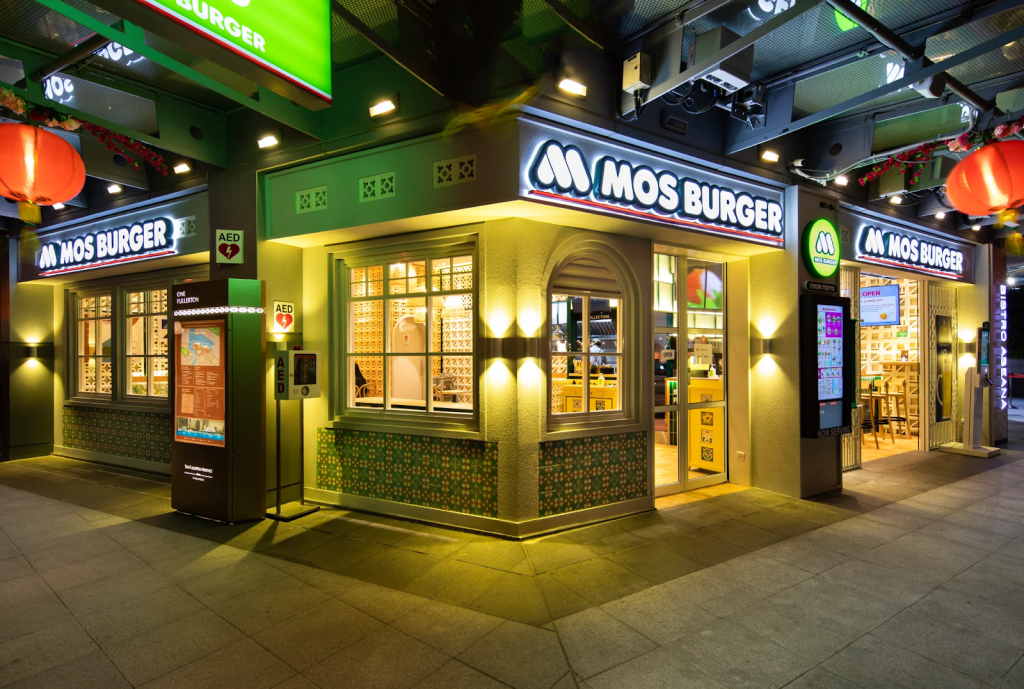
f&b interior design for mos-burger
Instagrammable neon and LED accents are popular, yes, but done poorly, they blind diners or distort colours. My team has fixed spaces where the neon was so bright it made pasta look grey. It’s subtle mistakes like these that separate “nice-looking” from “functional and profitable.”
The right neon, integrated carefully into counters or under banquettes, energises the space without overwhelming it. This is not all about showing off but balance.
Biophilic Elements with Tropical Greenery

f&b interior design for dipndip
Singaporeans also love greenery, but you cannot simply put a plant in a corner and call it biophilic. I’ve seen vertical gardens collapse in weeks because someone ignored humidity, soil, and maintenance.
The right greenery, hung above booths or as a vertical wall, combined with timber, rattan, or stone, brings calm, premium energy. It softens hard surfaces and keeps people lingering longer, but only if it survives.
Multi-Functional Modular Furniture
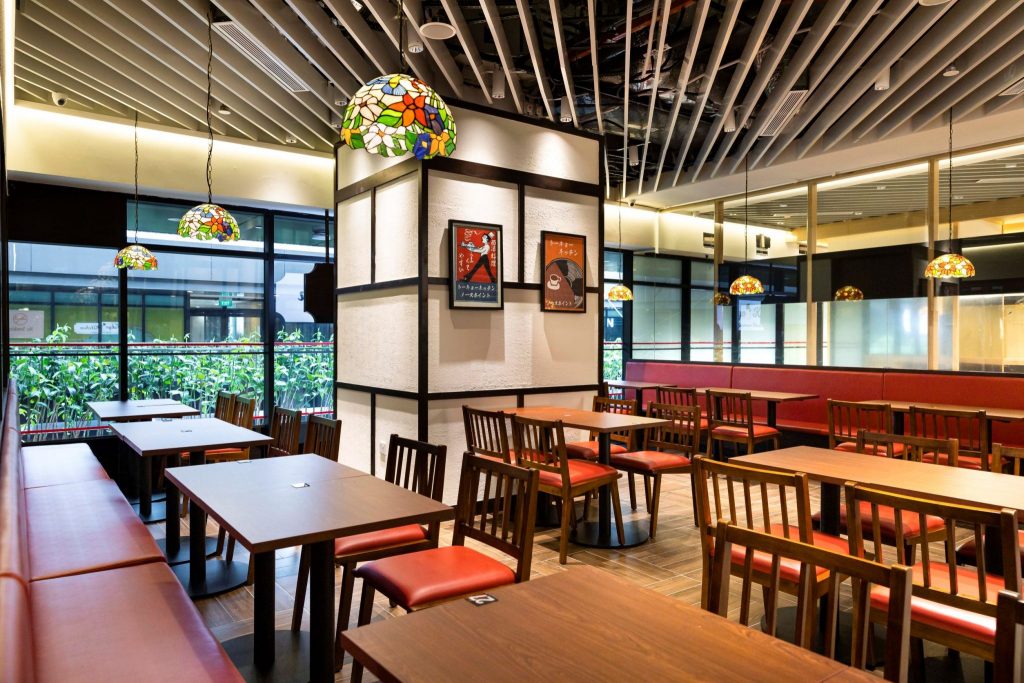
f&f interior design for Tokyo Restaurant Singapore
Many restaurant owners often underestimate furniture. Every square metre counts in Singapore. Modular, movable, fold-away pieces are not flashy, but they are critical.
Swapping in stackable chairs and movable tables transformed circulation and dwell time. Function is not optional. It’s everything.
Heritage-Modern Fusion Walls

f&f interior design for Torisanwa
Heritage-modern fusion is another area where amateurs stumble. People want local identity, not cheap pastiche. Peranakan tiles with minimalist furniture, calligraphy on concrete, and colonial arches with subtle lighting create story without shouting.
I’ve seen restaurants plaster “heritage” wallpaper on plywood, and it was painful to watch. Intentional, thoughtful design connects with locals and tourists alike.
Open-Kitchen Theatrical Layouts

f&f interior design for baker brew
Open kitchens build trust. Diners want to see cleanliness, and a little theatrical flair never hurts. But heat, noise, and staff movement have to be managed carefully.
We have designed kitchens where guests can watch chefs, but the team is not sweating bullets. Balance matters.
Cozy Nook Seating Zones

f&f interior design for berthhold
Comfort cannot be overlooked. People come to eat, to meet, to celebrate. Booths, semi-private alcoves, and soft banquettes encourage longer stays. My team once added just a few booths to a cramped café, and dwell time went up immediately. Guests stayed noticeably longer, returned, and sales went up.
Sustainable Material Palettes

f&f interior design for berthold
Sustainability matters, yes, but it has to feel real, and it has to feel premium. some restaurants use recycled wood or low-VOC paints, and when it’s done thoughtfully, it adds warmth and quality. But slap on something cheap-looking and call it “eco,” and diners notice immediately. It feels dishonest and honestly ruins the whole vibe.
Dynamic Lighting Layers

f&f interior design for mellower cafe
Café by day, bar by night. Same space, different moods. Dimmable overheads, accent lights, warm and cool zones. Most people underestimate this.
Done poorly, guests struggle to read menus, staff stumble, the mood dies. Done properly, lighting disappears into the experience, guiding diners, setting energy levels, and subtly controlling behaviour, all without anyone noticing.
Cultural Motif Art Installations

f&f interior design for tamjai samgor mixia
Cultural motifs connect people emotionally. Orchids, lion dances, local street photography. Done poorly, it looks theme-park cheap. Done thoughtfully, it builds emotional connection.
Tech-Integrated Smart Spaces

f&f interior design for tamjai dian xiao
QR menus, smart speakers, digital queues are expected this days, but when technology is poorly implemented, it frustrates both diners and staff.
When integrated correctly, technology disappears into the space, speeds up service, reduces mistakes, and actually improves the dining experience. Done wrong, it’s not just useless but can actively make things worse.
These ideas are not just “tips.” They’re lessons learned from dozens of real Singapore F&B projects.
Common Mistakes to Avoid in F&B Interior Design Singapore
Overcrowded seating is one of the quickest ways to ruin a space. You will see some restaurants cram tables so tightly that guests bump elbows, staff trip over trays, and the whole energy dies. Comfort is not optional but revenue.
Poor ventilation is another silent killer. The moment a space feels stuffy or smells linger, diners notice, and they leave. We have fixed layouts where simply repositioning vents transformed the entire atmosphere.
No acoustic control is underestimated. Loud spaces frustrate diners and staff alike. Simple acoustic planning can save hours of frustration every day.
Bad lighting, again, ruins everything. Wrong colour, harsh shadows, neon in the wrong spot – it makes food look unappealing and energy flat. Lighting should disappear into the experience, not dominate it.
Ignoring regulations may seem minor until fines hit, or worse, until the space becomes unsafe or unfit for operation. I’ve seen shortcuts backfire, painfully, because someone decided compliance was optional.
This is exactly where true F&B interior design and renovation experts shine. They anticipate every detail, combine beauty with function, and create spaces that work for diners, staff, and business alike.
Choosing the Right F&B Interior Design Company in Singapore
Picking a designer is not about the flashiest 3D renderings. I’ve seen too many owners fall for pictures that look perfect but fail the moment the first tray of drinks is served.
You need someone who understands Singapore, including its rules, its quirks, the little things that can quietly derail a project if ignored.
Look for a real F&B portfolio. Not just pretty cafés or Instagram spots. I mean spaces that survive lunchtime chaos, that make staff work easier instead of harder, that don’t just look good when empty but function beautifully when packed.
In-house renovation teams are a must. Outsourcing is fine for some things, but when critical work is handed off, quality slips, details are missed, and suddenly what should have been perfect is not.
A professional F&B interior design company does not just draw plans but builds, supervises, and fixes. They take responsibility. Yes, mistakes may happen but the difference is knowing how to fix them and make the space better than before.
Conclusion
Modern businesses need spaces that are both functional and experience-driven. From innovative f&b interior design in Singapore concepts to well-planned retail interior design solutions, design plays a crucial role in shaping perception. Brands can also draw inspiration from commercial interior design ideas such as these while implementing flexible store designs , layouts and efficient office interior design setups. With the support of a trusted design and build company and a reputable commercial interior design company as such IDBox, your space can deliver lasting value.
Final Thoughts
I’ve seen too many restaurants waste money on “pretty” interiors that don’t actually work. Smart F&B interior design is not decoration. Not even close. It’s strategy. It shapes how people move, where they linger, how they feel, and yes, how much they spend.
If you’re serious about building a profitable F&B brand in Singapore, don’t settle for someone who just draws “nice pictures.”
Work with a trusted F&B interior design and renovation company like IDBOX, where design meets reality, problems get solved, and the space actually functions under pressure.
Mistakes may happen; they always do, but here, every misstep is a chance to make it better. That’s the difference between something that looks good and something that really works.