
Strategic retail interior design in Singapore improves brand visibility, builds trust with your customers, impacts emotions and boosts retail shop revenue drastically.
Therefore, creating a shop space that attracts loyalty and transforms casual visitors into potential customers takes more than just a great product. The best retail interior design company matters in this competitive Singaporean landscape.
In this guide, ID Box shares sure retail interior design ideas that help retail shops in Singapore and across the globe improve their business flow, attract attention and improve sales in 2026.
Let’s dive in!
Why Retail Interior Design Impacts Customer Buying Decisions
The shop space or environment significantly influences customer psychology. The space will detect the mood, time spent and the buyer’s decisions once they enter a retail shop. A well-executed store design directly taps into customers’ psychology without them knowing.
Here’s how interior design for a retail store impacts customers’ buying decisions:
Firsts Impression Attracts Sales than Ads
First impressions play a monumental role in the mind of customers and transform their trail of thoughts immediately they step into any retail store in Singapore. For instance, your store’s color, layout and lighting silently conveys your brand’s message and personality without shouting.
Meaning, uninviting space piss off customers and tells them you don’t care once they interact with your retail store for the first time. First impression can dictate the details and quality of your products.
Strategic Interior Design Encourage Exploration & Reduce Pressure
Comfort in your store helps to mitigate pressure and enhance exploration of your products when customers visit your store. Typically, a well-organized and calm store layouts helps guests feel comfortable and reduce pressure altogether.
Thus, when business environment feels secure and amazing, decision-making among buyers becomes easy.
Studies conducted by Steve W & Kevin E about retailing and customer services disclosed that improving business environment such as scent, lighting and layout motivates customers to spend more time searching and increase their retention rate in business.
9 Retail Interior Design Ideas That Drive Sales & Boost Brand Visibility
Every retail shop conveys a message through its lighting, layout and shop environment. We’ve penned down nine interior design ideas for retail store that integrates creativity with strategy.
Read on to find out!
#1. Use of Design Materials That Tells Your Brand’s Story

The message your brand broadcast to customers matters a lot. Your shop is a typically manifestation of your brand identity. In 2026, with the ever-changing marketing designs, generic interior design might not be productive.
You have to focus on storytelling by using the right raw and reclaimed textures that best fit your brand and tells a story. For example, for a high-tech retail shop, use sleek finishes and maximize on minimalism to attract and scream your company’s brand goals and mission.
#2. Optimized Layout & Customer Flow

Optimizing layouts and customer flow is an exceptional retail interior design ideas that involves creating wide pathways by use of a decompression zone at your shop entry point. These layouts are usually clear and placed strategically to guide customers into your shop.
High premium items are always used as a focal point with conspicuous displays to facilitate customer journey, thereby, boosting sales and customer satisfaction. This interior design idea makes your shop space uncluttered, intuitive and visually attractive.
#3. Design a Captivating Entrance and Window Display

Use your entrance to capture the attention of your customer immediately they enter your shop. Captivating entrance and use of window display is one of the best retail interior design ideas you can implement effortlessly to attract your customers attention right away.
Well designed window display and captivating entrance primarily tells your brand story and encourages potential clients to do business with you. In this case, the key strategy is to merge design creativity with business strategic elements.
Colors perform well in retail space interior design when using this design idea. For instance, vibrant and bold colors used in widow displays and entrance attract attention from a distance, while subtle hues can establish a sense of elegance. Similarly, consider using ambient and accent lighting to create a relaxed mood and keep lighting at night.
#4. Use Lighting as a Sales Tool

Strategic lighting in retail shops comes with hidden benefits and is known to boost sales by as much as 40%. Lighting is a powerful tool that influences business sales, customers mood and promotes product appeal among others.
Similarly, retail lighting goes beyond illumination in the store, it plays a major role in reinforcing brand identity and improve business revenue. Also, well-placed lighting helps to create clear pathways, directing shoppers through the retail shop and pointing their eyes to new arrivals or high-margin products.
#5. Balancing Display Density and Open Space

Balancing display density and open space is an important design idea, especially in urban planning, which usually aim for sustainability without altering the quality of the products. This balance is created through integration of planning tools and design strategies.
Often, high-end retail shop interior design employs the use of “Negative Space” to indicate luxury. Therefore, if your retail shop is considered cluttered, the imagined value of items by your customers drops instantly.
Nonetheless, by leaving open spaces between products allows items to have a good space and accords the shoppers leeway to move freely while shopping, which is a significant element in premium shopping experience.
#6. Use Visual Focal Point

A focal point is a must-have element in any retail shop looking to increase its sales and boost customer relationship. This is a dominant area or element in a retail interior design that instantly captures customer’s attention and direct their eyes to targeted products in the shop.
A visual focal point includes items such as a featured wall, bold display, or a striking color block placed strategically in your shop. It is advisable to rotate this focal point more often to encourage repeat visits and more product exploration.
For example, Nike’s flagship shop utilizes rotating themes to maintain the freshness of their interior shop without costly designs involved.
#7. Feature Local Artisans & History
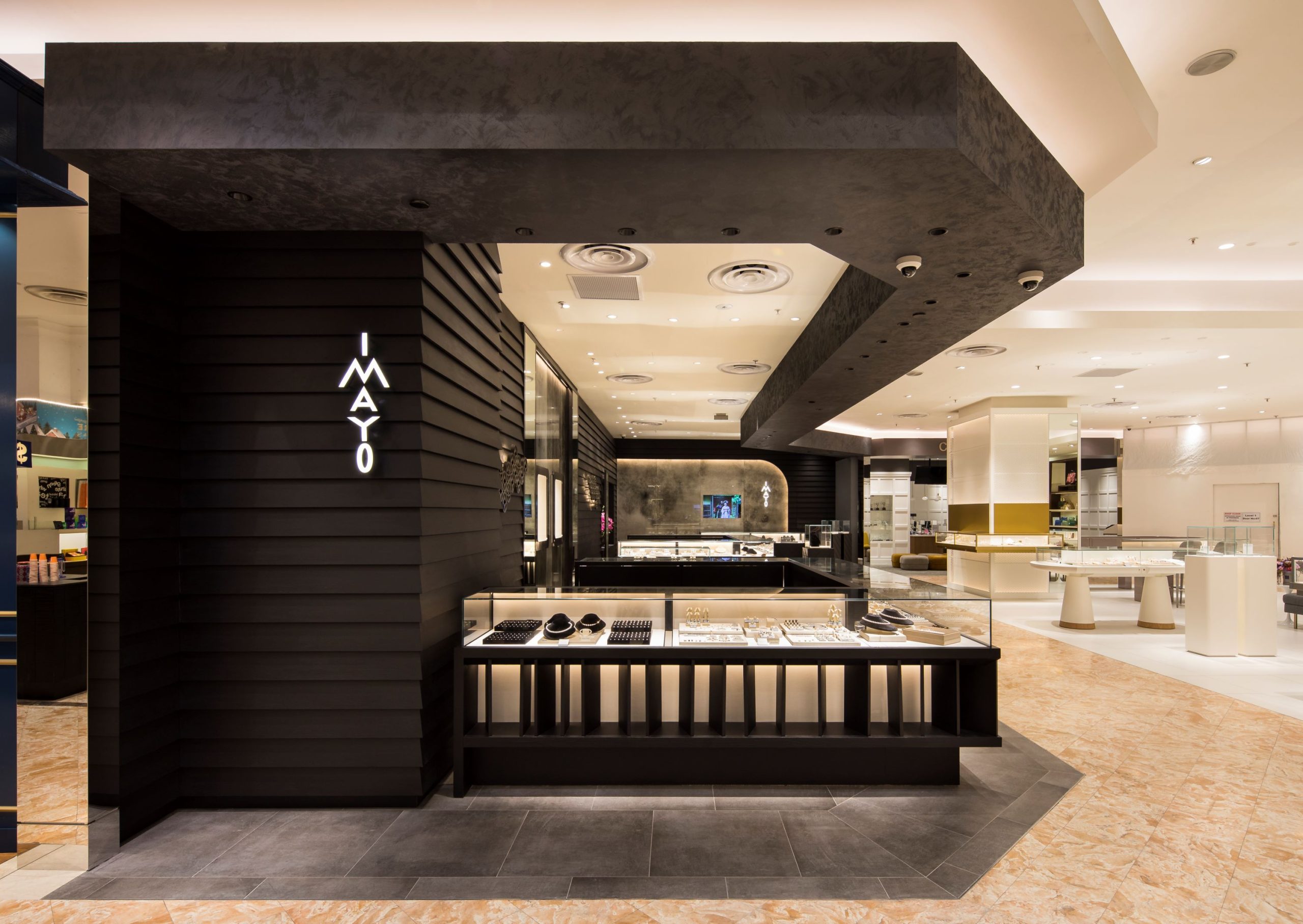
If you want to connect your business brand to the Singaporean community, hyper-localization is the best retail interior design to implement in 2026. Combining history and the local artisans into your interior design for retail shop creates stunning and real customer experience that promotes a robust community connection.
Similarly, this interior design idea set-apart your brand from your competitors, hence building a strong relationship and trust. Featuring local artisans and history support local talents and aim to preserve cultural heritage, attracting consumers who value products that share a unique story.
Localization is achieved by using materials in fixtures and shop architecture that resonates with the community or region such as wood, local stones or textiles.
#8. Sensory Design Beyond Sight

This retail interior design idea involves the use of scent, sight, touch and sound to create appealing and captivating store ambiance that connects well with the customers on a deeper emotional level.
Sensory design element helps to transform ordinary shopping into a more memorable encounter that transcends the normal selling of products. This design idea can be achieved by combining music, lighting, and scents to streamline store’s environment and welcome customers to explore and stay longer in the shop.
Additionally, the use of texture, color and layout strategically can be used to set the mood and direct shoppers towards high-end products in the store.
#9. Technology & Interactive Elements

Technology is big in Singapore and many interior designers have incorporated technology and interactive elements in retail interior design to create personalized shopping experience.
Tools like smart displays, AR mirrors, touchscreen and AI personalization are used in commercial retail interior design to improve engagement, shape shopping and combine offline and online buyers’ journey, making shops efficient, dynamic and interesting for customers.
FAQs
What mistakes reduce sales in retail interior design?
Cluttered entrance, poor lighting in retail shop, invisible wayfinding and narrow aisles in the shop are common mistakes that tend to reduce sales in retail stores.
How often should a shop redesign or refresh its layout?
Shop redesigning often depends on the nature of the redesign such as full redesign can be done every 5 to 7 years, visual refresh, every 12 to 18 months and layout shuffles can take up to 3 months.
How much does a Retail interior designer cost in 2026?
Retail interior design cost comes with different pricing depending on the type of labor use. For instance, retail interior designers can cost up-o $5 to $15 per square foot, $50 to $500 hourly or a flat fee of $200 to $300.
Which shop layout style works best for small boutiques?
Free-flow or loop layout are the best for small boutique. A loop layout directs shoppers in certain direction, ensuring they everything in your inventory, while free-flow layout encourages more shop browsing and exploration.